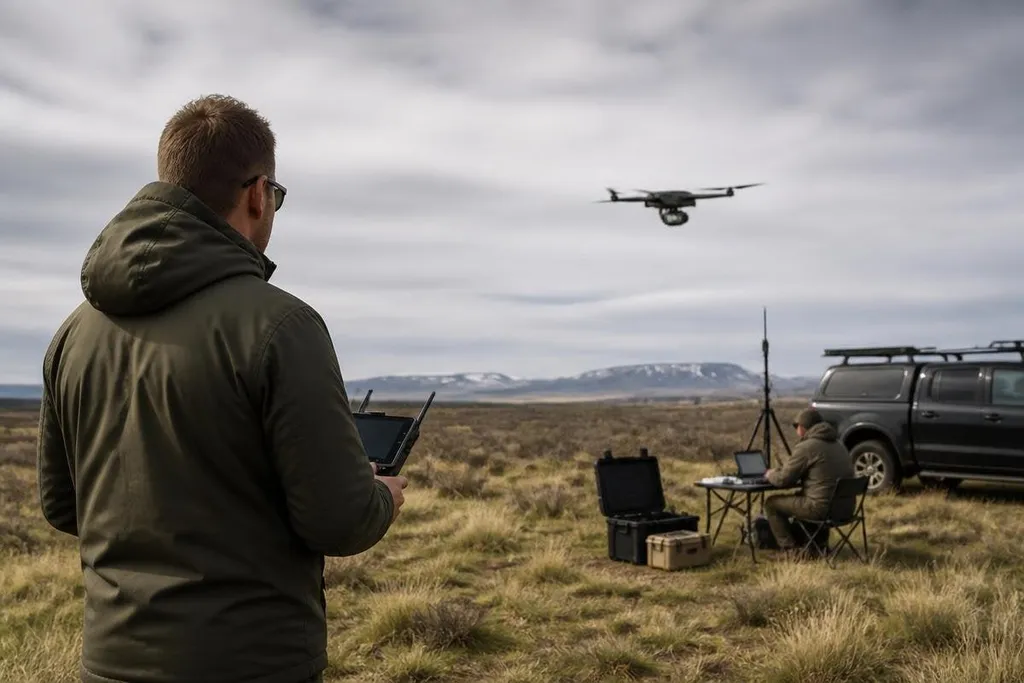
A defense drone can now carry cameras, radios, and onboard software that helps it act with less direct control. The hard part is proving that this software works when signals fade, weather changes, and a person must still make the final call.
- Autonomy needs limits: The system should state what it may do alone and when control returns to an operator.
- Sensors need context: A camera feed means little if the drone cannot tell a vehicle from background movement.
- Field proof matters: A polished test clip cannot replace records from repeated trials in difficult conditions.
Smarter means more than onboard software
The phrase “smarter drone” can cover several different systems. One aircraft may use software to hold a route, another may sort objects in a video feed, and a third may share data with other vehicles. Those tasks need different tests, so one broad claim tells you very little.
Start with the job. If the drone watches a border area, the test should measure detection range, false alerts, flight time, and the time needed to pass a finding to an operator.
If it carries a radio relay, the test should focus on link quality, coverage, and how the system behaves after a connection drops.
That detail matters for defense teams because more onboard decision-making can reduce the operator’s workload while making errors harder to spot. The system needs a clear record of its sensor input, software decision, and human response.
Autonomy needs a clear handoff
Autonomy means the drone can carry out part of a task without constant control. It does not remove the need for a person, especially when the system must identify a target, enter restricted airspace, or use force.
The handoff between software and operator deserves its own test. The system should state when it asks for help, what information appears on the control screen, and how much time the operator has to respond. A lost link should produce a known action, such as holding position, returning, or landing in a safe area.
Those rules also need to work under interference. Satellite navigation can become unreliable, radio links can weaken, and sensors can produce poor results in smoke, dust, darkness, or heavy rain. A drone that works only with clean signals has a narrow job, no matter how capable it looks in a short video.
The data problem sits underneath the hardware
Software that spots vehicles, people, or objects learns from examples. If those examples miss local terrain, weather, clothing, camouflage, or camera angles, the results can change when the drone leaves its test site.
Defense buyers should ask how the system records errors and how teams update its software. They should also ask who may inspect the data, how long recordings remain stored, and whether a later software update changes the system’s behavior without a new flight test.
A defense drone can act differently after a software update, even when its airframe stays the same. Reporting at Robot24.com can compare the changed software, flight test, operator role, and approval record, setting up the next section’s test for claims about autonomy.
What a serious test should show
A test report should connect the drone’s task to a result that another team can check. “The drone used autonomy” is too broad. A report might state how many routes it completed, how often an operator had to take control, and what happened after sensor or link failures.
The report should also separate the aircraft from the wider system. A drone may fly well while its ground station, radio network, battery supply, or repair process creates the real limit. Buyers need the full setup, since field teams operate the system rather than the airframe alone.
Claims about coordination need care too. Several drones sharing a map is one task. Several drones choosing routes, avoiding one another, and keeping contact with operators is a harder task that needs its own evidence.
A practical check for defense teams
Use these questions before accepting a claim about a smarter drone:
- Name the task: What must the drone do, and what result counts as success?
- Check human control: When does an operator approve, reject, or take over a decision?
- Test bad conditions: What happens during lost navigation, weak radio links, poor weather, or blocked sensors?
- Review the record: Can the team inspect sensor data, software decisions, alerts, and operator actions?
- Price the support: What do training, batteries, repairs, software updates, and ground equipment add?
- Set the limit: Which task remains unproven outside the test site?
I'd be cautious about any system described as smart without a clear failure plan and repeatable test record.
The defense drone market will produce many claims about autonomy, coordination, and onboard AI. The useful dividing line is simple: can the maker show what the drone does, when it stops, and who remains responsible?